Blog

NTC Blog Posts

Blog

The Israel-Palestine War & The Media’s War on Truth

When the press fails to be objective in times of crisis, the truth becomes harder to find. To prove it, one need look no further than the media’s coverage of the Israeli-Hamas conflict.  The Hamas terrorist attack on Israeli civilians on October 7 and the corresponding rise in displays of antisemitism across the west have created chaos — both in the streets and on social media.  A reasonable observer would expect the media to cover ongoing seismic events as impartial conveyers of information, especially given the high stakes for global and social stability. Objectivity is the expectation of the press by the public, and the promise made by the media itself. Yet in recent weeks the media has failed time and again to uphold its stated values at a time when it is needed the most.  One bombshell report claims that freelance photojournalists in several legacy media outlets such as AP, Reuters, CNN, and the New York Times were embedded with Hamas during the October 7 attacks. Photojournalist Hassan Eslaiah, who works for CNN and AP, was seen standing next to Yahya Sanwar, the mastermind behind the October 7 massacre. He also snapped a photograph of a group of Hamas terrorists infiltrating a kibbutz and burning a house.  The New York Times’s coverage of the October 7 attacks did not use the word “terrorist.” One particularly notable headline reads, “Gaza Militants Fire Rockets and Enter Israel in Surprise Assault.” The Washington Post stealth edited a report in which they said Israeli women and children who were abducted by Hamas were merely “detained.”  Related and equally concerning is the news that over 750 current and former global journalists signed a petition demanding that media coverage cast Israel’s response to the Hamas terrorist attack as “genocide” and “apartheid.” Journalists from Reuters, Los Angeles Times, The Boston Globe, The Guardian, and The Washington Post are among the petition’s signatories.  The Head of BBC’s Global Service, Liliane Landor, told journalists during a meeting that “it is wrong to use expressions like ‘massacre’ to describe Hamas’s behavior.”  And after police arrested a pro-Palestinian protester on charges of manslaughter for causing the death of elderly pro-Israel demonstrator Paul Kessler, CNN covered the story under the banner headline: “Arrest made in death of Jewish protester who fell and hit his head.”  Such reporting isn’t just egregious; it’s dangerous. In times of war, a single misreported fact has the potential to affect the course of geopolitics, social stability, and the war itself. It comes as little surprise that only 7% of Americans have a “great deal” of trust in the media according to public polling. There is no hope for that number to increase unless media outlets reverse course, address bias, and show the public that their one and only standard is truth.       [Image credit: MyEyeSees, CC BY-NC-ND 2.0 DEED, via Flickr]

Blog

The School for Scandal

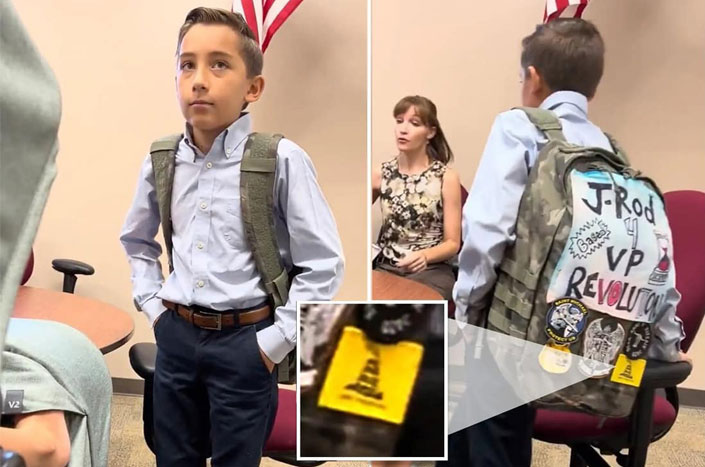
When educators are ignorant of history, history is in danger of being rewritten.  Earlier this month, the Gadsen flag — a symbol that represents rebellion against tyranny — was ironically at the center of controversy. Jaiden Rodrigez, a 12-year-old student attending the Vanguard School in Colorado Springs, was kicked out of his seventh-grade classroom by administrators for wearing a Gadsden flag patch on his book bag. A surreptitiously recorded video released by Connor Boyack shows Jaiden and his mother having a discussion with the school’s vice principal, who declares that the reason the flag cannot be displayed is “due to its origins of slavery and the slave trade.” This is, of course, entirely false — and a gross rewriting of the Gadsden flag’s history. The iconic yellow flag, depicting a rattlesnake with the phrase “Don’t Tread On Me” below it, was designed by South Carolina soldier and delegate Christopher Gadsden in 1775 during the Revolutionary War. Soon after its creation, the first United States’ Naval commander-in-chief, Commodore Esek Hopkins, hoisted the flag from his ship, the USS Alfred. In February 1776, the flag was submitted to the Provincial Congress of South Carolina by delegate Gadsden as a pro-freedom symbol and a warning to the British not to violate the liberties of Americans. Being ignorant of the Gadsden flag’s origins is one thing, but for an educator to assert an entirely rewritten its history while simultaneously attempting to erase its display is unacceptable. The video of the exchange, filmed by Jaiden’s mother, quickly went viral, amassing eight million views in one hour and racking up tens of millions of views across all social media platforms. Online outrage soon exploded — and it was channeled into action. People across the country sent messages to Vanguard School administrators lambasting their poor decision and lack of historical knowledge. It worked. Within hours, the Vanguard School board of directors called an emergency meeting and issued a statement siding with Jaiden asserting the institution’s stated values. “From Vanguard’s founding we have proudly supported our Constitution, the Bill of Rights, and the ordered liberty that all Americans have enjoyed for almost 250 years. The Vanguard School recognizes the historical significance of the Gadsden flag and its place in history. This incident is an occasion for us to reaffirm our deep commitment to a classical education in support of these American principles. At this time, the Vanguard School Board and the District have informed the student’s family that he may attend school with the Gadsden flag patch visible on his backpack.” The next day, Jaiden posted a video on social media sharing that kids were “hyped up” by the attention he gained for standing his ground. Some even put Gadsden flag stickers on their lockers as a new trend. Jaiden’s story is doubly instructive: it illustrates the courage required to combat virtue-signaling bullies with a superiority complex — even under threat of getting canceled, losing a job or friends, or getting kicked out of school. This incident also showed the power that grassroots action has to hold institutions accountable. It wasn’t just Vanguard School students and parents pushing back; it was the people, and the people got results. If Jaiden and his mother hadn’t taken a stand, the Gadsden flag would have been another piece of culture surrendered to the revisionists. Instead, their resolve provided a valuable lesson: When faced with woke bullies, don’t let them tread on you. [Photo credit: Connor Boyack / @cboyack (screenshot of video on X)]

Blog

“The Big 3”: ESG & DEI’s Puppet Masters

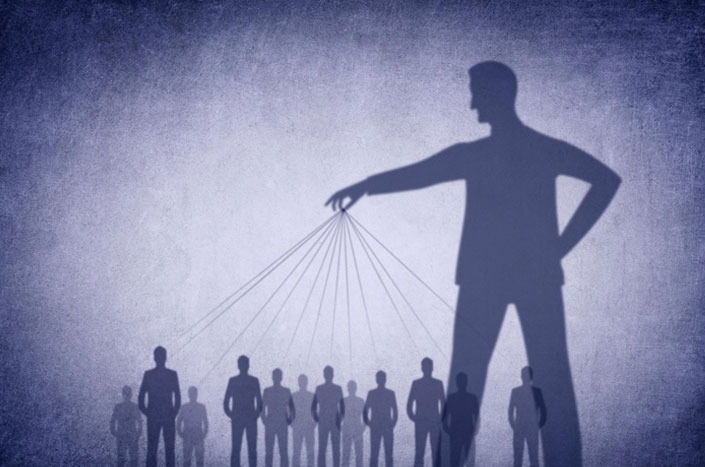
When it comes to tracing the roots of so-called Environmental, Social, Governance (ESG) and Diversity, Equity, Inclusion (DEI) requirements, all roads lead back to “The Big Three”: Blackrock, Vanguard, and State Street. Together, this triad of financial behemoths own the majority of stock in 88% of the S&P 500 companies; they own at least 5% of 97.5% of all S&P 500 companies. The influence of The Big Three is pervasive and near-omnipotent. These index funds control about 25% of all stock of every public company in the world. Blackrock manages nearly $10 trillion in assets; Vanguard manages $8 trillion, and State Street has more than $4 trillion — an amount nearly equivalent to the United States GDP, and over three times as much money spent by the United States federal government in all of 2022. Their agenda is not a hidden secret. Blackrock CEO Larry Fink has on numerous occasions admitted to forcing behaviors based on gender and race, and State Street has demanded companies disclose the diversity data of their employees. If companies refuse, State Street has promised to vote against investing in them. This dynamic of consolidated power leads to less market competition. It also allows The Big Three to demand ESG and DEI standards in the marketplace. Conform to their social agenda…or else. Take, for example, energy giant Exxon Mobil: last year, Blackrock, Vanguard, and State Street all supported the replacement of certain Exxon Mobil board members who opposed climate change initiatives. They were replaced with people who promised to make climate change a priority. Similar efforts have been made by Blackrock and State Street to punish the Walmart Board of Directors if they do not adopt similar climate and diversity standards. The stranglehold of The Big Three isn’t limited to the corporate world; they’ve begun to extend their influence to governments as well. Blackrock has already invested hundreds of millions in climate initiatives in third-world countries, making them beholden to the financial giant. Blackrock has likewise pressed its climate and ESG initiatives beyond the third world. Their tentacles recently penetrated New Zealand. The country partnered with Blackrock to ensure a 100% renewable electricity power grid, leaving tens of thousands out of work with new fossil fuel standards ending their occupations, despite the country already running on 82% renewable energy from hydroelectric dams. Blackrock, Vanguard, and State Street not only have an exorbitant amount of power over global markets, but also global culture. Curtailing their reach will require financial and grassroots pushback. Otherwise, their aggressive agendas won’t end with ESG and DEI; they’ll only have just begun.

Blog

Affirming DEI?

As DEI retreats in higher education, its influence continues to grow in corporate America In the wake of the Supreme Court of the United States (SCOTUS) overturning affirmative action in college admissions in late June, there has been a subtle movement away from Diversity, Equity, and Inclusion (DEI) initiatives on many college campuses. Despite the common refrain that ending affirmative action is racist and is deeply unpopular with the American public, it routinely is rejected by American voters across the country. California voters overwhelmingly dismissed overturning the state ban on affirmative action in 2020, with 57% voting to keep the ban in place. Nationally, a supermajority of the American public — close to 70% — oppose considering race in college admissions. The vast majority of colleges and universities condemned the affirmative action decision by the Court and vowed to maintain avenues of factoring race into their admissions process, which is clearly contrary to their stated missions of equality. Harvard, an institution of higher education at the center of the SCOTUS case, has a Mission Statement that declares, “No one should be harmed or denied an equal opportunity to thrive because of their race, sex, ethnicity, sexual orientation, gender identity, national origin, disability, or religion” — a hypocritical statement in direct conflict with the school’s affirmative action policies. In the wake of the SCOTUS decision, numerous institutions have begun to cut back on some of their so-called “diversity, equity, and inclusion” (DEI) initiatives that contradict equal opportunity for all students. The New College of Florida, for example, dissolved its DEI office, as did the University of Arkansas. The University of Missouri, the University of Kentucky, and other schools announced an end to race-based scholarships, seeing them as next in line to be challenged in the courts. But as DEI faces retreat in higher education, its influence continues to grow in corporate America. DEI initiatives across the country have been supercharged in recent years. Following the riots of 2020, major corporations such as Microsoft, JPMorgan Chase, and Goldman Sachs all pledged to enforce racial quotas and meet diversity goals within five years (2025). The corporations exceeded these goals. Microsoft, for example, hit their targets in 2023. Their response? To commit to even more divisive DEI projects. In 2019, financial giant Goldman Sachs committed to racial quotas for new interns, and financial incentives to black and hispanic workers. Tech companies such as Google and Facebook have embraced similar quotas and race-based practices. The Supreme Court decision striking down affirmative action in college admissions marked one step toward re-instituting a nationwide culture in which reward is based on merit rather than race. Whether we as a country continue on this journey in academia and in business remains to be seen.

Blog

Academy Insanity: Christian Toto & the New Oscars Diversity Requirements

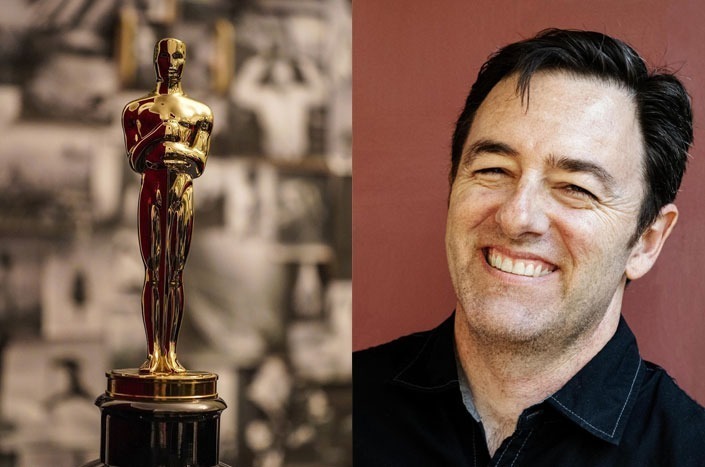
Spurred on by the “#OscarsSoWhite” progressive Twitter pile-on of 2015 and catalyzed during the Black Lives Matter movement of 2020, the Academy Awards has implemented revised Oscar eligibility criteria to include mandated diversity requirements — and the list is quite something to behold. On-screen “at least one of the lead actors must be from an underrepresented racial or ethnic group,” the new rules state. “30% of actors in secondary roles be from underrepresented groups such as LGBT+ and people with cognitive or physical disabilities,” and the plot must “center around an underrepresented group.” Off-screen “the leading producers must have at least two members from an underrepresented group on their staff,” and “six members of the crew/technical team must be from those same underrepresented groups,” and “senior executives on the film must also meet certain thresholds for those underrepresented groups.” The rules even extend to interns! Productions must have “at least two interns from underrepresented groups, and those opportunities must be prioritized” over those in properly represented groups.” How will all of this be enforced? With a literal checklist. Movies will need to submit an “Academy Inclusion Standards form” for major award consideration. And that’s not all: the Diversity Police will also be on the case — the Academy will conduct spot checks and interviews to ensure producers aren’t fudging the numbers on their forms. It’s estimated that of the 95 Best Pictures in the history of the Oscars, over half would not qualify under these new diversity thresholds. Gone with the Wind, Wizard of Oz, Citizen Kane, Casablanca, Singin’ in the Rain, The Sound of Music, The Godfather, Star Wars, Taxi Driver, Goodfellas, and Schindler’s List all would have been ineligible for top honors. Even recent critically acclaimed movies such as 1917 and The Irishman wouldn’t make the cut. “Anything that interrupts the creative process is a potential problem,” film critic and founder of Hollywood in Toto Christian Toto (pictured) told the New Tolerance Campaign. “Some stories may be perfect for an Oscar-worthy presentation, but they may not be told because they don’t align with the approved narratives. We may see an artificial uptick in diversity numbers, but does that include other groups marginalized by Hollywood — conservatives and Christians? Why don’t they get special protection given how they’re ignored or maligned within show business?” Conservatives aren’t the only ones skeptical of the Academy’s new mandates. Richard Dreyfuss, known for his roles in Jaws and American Graffiti, (two movies that also wouldn’t make the cut today) said the new standards “make him want to vomit.” Others haven’t been as outspoken. “Actors are very afraid to speak out against the new diversity rules,” Toto said. “The New York Post’s story on the subject had several industry critics but no one shared their name. Fear is very powerful in Hollywood, and if you’re suspected of being critical of aggressive diversity measures there will be consequences.” All of it makes one wonder: If only some movies receive Oscar consideration, can any objectively be called “Best Picture”?

Blog

The Toxic Ten: The Year’s Worst Examples of Shareholder Activism

Corporations have moved dramatically to the left on social and cultural issues over the past decade in America — in some cases by force. Shareholder resolutions have pushed publicly traded companies to put social issues over profits. Any activist holding over $2,000 in stock for a period of at least a year can sponsor a shareholder resolution at a corporation’s annual board meeting. As a result, corporations have been pressed to take positions on everything from abortion to gun control and LGBTQ policies, just to name a few. Although only around 10% of all resolutions pass, they still force companies to concede ground to radical social causes. 2023 in particular has been a year full of extreme shareholder resolutions. Here are ten of the most outrageous: MasterCard was pressured by left-wing shareholders to track gun-related transactions, creating a de facto national firearm database. Read the full story here. Bank of America was pushed by shareholders to release details on how the company would meet the 2030 climate transition target. Only 28% of shareholders voted or the resolution, but it still put the public spotlight on the company, forcing them to commit to other disclosures related to climate and manufacturing. Read the full story here. Johnson & Johnson and The Home Depot were forced by the majority of shareholders to conduct racial equity audits of their respective companies. The vast majority of these shareholder resolutions concern so-called “Diversity, Equity, and Inclusion” (DEI) and climate change. Johnson & Johnson and Home Deport are now required to perform these “equity” audits. Read the full story here. Boeing is now forced by shareholders to support climate reforms the run counter to the financial interests of the company. Activist nonprofits like “As You Sow” are leading the push for similar shareholder resolutions that inject radical social policies into business models. Read the full story here. Exxon Mobil was at the mercy of environment groups that secured passage of resolutions forcing the corporation to undertake cumbersome sustainability and decarbonization efforts, putting the profitability of the corporation at risk. Read the full story here. CNX was met with shareholder resolutions demanding the company adhere to the Paris Climate Agreement and outwardly lobby for its global adoption. The resolution was ultimately defeated, but its consideration included a devastating public relations campaign that damaged the brand. Read the full story here. Jack in the Box, the popular fast food restaurant chain, was made to adopt a resolution requiring the corporation to solely support sustainable — and onerous — packaging sponsored by Green Century Capital Management. Read the full story here. Apple was forced by shareholders to oversee a third-party audit of their racial equity standards, and to go “above and beyond all legal and regulatory matters” to ensure people of color are prioritized for hiring in the name of civil rights. This vague language calls for Apple to discriminate against certain races in the name of “equity.” Read the full story here. Target was the target of shareholder demands to support a racial and gender scorecard published by Arjuna Capital, an investment firm committed to “divest from fossil fuels, promoting gender pay equity, and fighting internet hate speech.” Read the full story here. Disney faced shareholder resolutions calling for the company to publicly support “LGBTQ+” issues and provide a detailed report explaining how it will support “human rights” in Florida. Read the full story here.

Blog

Bigger Meaning Behind Bud Light Backlash

It hasn’t been a good month for Bud Light. On April 1, Dylan Mulvaney posted a video announcing Bud Light sent custom beer cans emblazoned with the TikTok star’s face to commemorate “day 365 of womanhood” — the one-year anniversary of Mulvaney coming out as transgender. Bud Light touts itself as “Easy to Drink, Easy to Enjoy,” but many Americans found the Mulvaney partnership hard to swallow. Musician Kid Rock recorded a video blasting a case of Bud Light with a gun. Author Matt Walsh spearheaded a boycott of the brand. And U.S. Senator Ted Cruz told Newsweek he was “hard-pressed to think of an instance where a company understood less about the consumers who actually purchase their product.” On Monday, April 10, Bud Light parent company Anheuser-Busch saw a three percent drop in its stock. Bud Light’s initial response to the controversy? Dead silence. The Twitter account of the beer brand — known for posting multiple times daily — went dark for two weeks. When Budweiser did finally speak up, it was via an effusively patriotic ad in which a narrator proclaims, “This is a story bigger than beer. This is the story of the American spirit.” In that much, Budweiser is right — albeit unintentionally. The lessons from Bud Light’s marketing mishap are far greater than the sum of its parts. The visceral response from everyday Americans wasn’t about hate for Dylan Mulvaney, transphobia, or even Bud Light — it was yet another instance of a major corporation needlessly injecting itself into a culture war, and it was a breaking point for many Americans tired of seeing everything politicized at every turn. This time, the people pushed back.       [Photo credit: Gonzalo Arizpe]

Blog

NTC Fast-Tracks Action by Oversight Board Following Facebook Suspension

Last month, NTC supporter Ryan M. had his Facebook account suspended. His crime? A post recommending action against the infamous Chinese spy balloon surveilling the United States from January 28 to February 4 — specifically, a call for the U.S. military to “shoot it down.” Facebook responded by suspending Ryan’s account for going “against community standards on coordinating harm and promoting crime.” After bringing the situation to the attention of NTC, President Gregory T. Angelo contacted the Facebook Oversight Board directly to demand answers. “Ryan wasn’t advocating harm to any living thing; he simply advocated for a course of action that was regularly discussed on the news, by elected officials, etc. — and that was ultimately taken by the U.S. military,” Angelo wrote. “When I didn’t know where else to turn, the New Tolerance Campaign had my back — and they get results.” —Ryan M. A representative from the Facebook Oversight Board responded with word that Ryan’s case was fast-tracked: “I will alert our shortlisting team,” the Oversight Board rep stated. Soon after, Ryan’s account was reinstated. “When I didn’t know where else to turn, the New Tolerance Campaign had my back — and they get results,” Ryan said.

Blog

Speech Police Partner with Puffin Books to Censor Classic Children’s Stories

On February 18, Puffin Books announced it would be revising and issuing new versions of classic children’s stories by Roald Dahl such as Charlie and the Chocolate Factory, Matilda, and James and the Giant Peach. Dahl has been dead since 1990. The decision was the result of a partnership between the Roald Dahl Story Company (which controls the rights to Dahl’s books) and an organization called “Inclusive Minds,” a company that pairs so-called “Inclusion Ambassadors” with authors to “help identify language and portrayals that could be inauthentic or problematic.” Inclusive Minds claims not to “edit or rewrite texts,” but their actions say otherwise. The changes to the books include modifying the description of Augustus Gloop, the gluttonous child in Charlie and the Chocolate Factory, from “enormously fat” to “enormous”; the famed Oompa Loompas are now gender-neutral “small people” instead of “small men”; the tractors described in The Fabulous Mr. Fox are no longer “black, murderous, brutal-looking monsters” but now “murderous brutal-looking monsters.” In the novel Witches, a woman masquerading as a “cashier in a supermarket or typing letters for a businessman” is now a “top scientist or running a business.” In James and the Giant Peach, Aunt Sponge, who was once “terrifyingly fat / And tremendously flabby at that” is now merely “a nasty old brute.” Public outcry in response to the news was loud and swift, from everyday American to British royalty. Queen Consort Camilla Parker Bowles said, “Please remain true to your calling, unimpeded by those who may wish to curb the freedom of your expression or impose limits on your imagination.” Comedian Ricky Gervais pondered “whether they’ll change any of the words I’ve used in my work after I’m dead, to spare those who are fragile and easily offended.” Salman Rushdie, an author who was stabbed at an August 2022 book event, said of the censorship, “Roald Dahl was a bigot and he never supported me, but really?” On February 24, Puffin Books backtracked, announcing they would print two versions of Dahl’s books: new, revised, and censored versions and unchanged “classic” editions. …unless you have the e-book versions of the Dahl tomes. On March 14, news broke that Puffin Books would be forcing e-book readers to accept and download the updated editions altered by their “inclusive” sensitivity editors. The Foundation for Individual Rights (FIRE), which has collaborated with the New Tolerance Campaign in the past, rightly stated: “Let’s leave Dahl’s words the way he intended them to be read. Let the work speak for itself, so we can all speak freely about the work.” We agree.

Blog

New Tolerance Campaign Announces 2022 “Worst of the Woke” Awards

WORST OF THE WOKE 2022 “The Great Unwokening” The Top 10 most hypocritical institutions of the year — and one “Champion of Tolerance”  In the past year, there was no shortage of institutions pushing phony tolerance under the banners of “diversity, equity, and inclusion” and “environmental, social, and governance” initiatives. But 2022 was also notable for the American public pushing back on institutions and their double-standards. Here are the 10 worst offenders: Award Winner: Disney* Reason: In 2022, now-ousted CEO Bob Chapek gave a master class on how not to respond to woke demands. Following the passage of Florida’s Parental Rights in Education bill (erroneously yet ubiquitously branded by the media as the “Don’t Say Gay” bill), Chapek demurred when Disney employees demanded the company condemn the legislation, rightly asserting that “corporate statements do very little to change outcomes or minds.” Weeks later, Disney did an about-face, declaring the company would support organizations seeking to “replace” the law or have it “struck down in the courts.” Florida legislators and Governor Ron DeSantis responded by stripping Disney of special taxation and self-governance perks it’s enjoyed for decades. The public wasn’t buying Disney’s activism either — quite literally. Following a string of box office bombs, in November Disney abruptly announced Chapek would be stepping down as CEO, making way for his predecessor Bob Iger to return. Iger stepped back into the role of chief executive committing to “quiet” the obsession with cultural issues at the entertainment powerhouse and “respect” consumers of their content. Award Winner: BlackRock* Reason: When you follow the ESG money trail, almost all roads lead to BlackRock. The financial behemoth manages $10 trillion dollars, and has been prioritizing investments in “socially conscious” companies and those dedicated to “environmental sustainability” — except in China, a nation notorious for its rampant industrial pollution and human rights abuses. When called out on the hypocrisy, CEO Larry Fink doubled down. The result: treasurers in West Virginia, Louisiana, South Carolina, Missouri, Florida, Arkansas, Utah, and Arizona pulled state investments from BlackRock totaling $4.28 billion. Award Winner: Twitter* Reason: After years of subjective censorship, account suspensions, and partisan activism, Twitter was at a breaking point by October of this year when Elon Musk stepped in and took over the tech giant, ushering in a new era of free speech and open debate. He also pulled back the curtain on Twitter’s previous policy revealing the platform’s critics’ worst fears: Twitter’s staff censored accounts at the bidding of political elites. Award Winner: Apple Reason: Apple touts a commitment to “diversity, equity, and inclusion” in the United States, while contracting with suppliers in China using forced labor that has propelled the company to record profits. In 2022, Apple took the hypocrisy to a dangerous new level: blocking iPhone communication features in China at the behest of the Chinese Communist Party to help crush domestic protests. Award Winner: American Express Reason: At American Express, prejudice and hypocrisy are everywhere you want to be. In 2022, journalist Christopher Rufo exposed AmEx rules that incentivized hiring and promotion based on race and sex. Not only are such policies illegal and in violation of the company’s fiduciary duties — they’re also un-American. In 2022, NTC unveiled the “UnAmerican Express” campaign in partnership with Color Us United and Consumers’ Research, rallying grassroots action that to date has generated more than 46,000 messages to state pension trustees alerting them to the concerning personnel standards at AmEx. Award Winner: Georgetown University Reason: The woke mob roared into action in January following a tweet by constitutional scholar Ilya Shapiro declaring SCOTUS nominees should be selected based on accomplishment rather than race. Georgetown Law responded by suspending Shapiro as the school’s Executive Director. The university exerted no such discipline in 2018 when Professor Christine Fair wished “miserable deaths” on supporters of Justice Kavanaugh. During a months-long Georgetown “investigation” into Shapiro’s tweet, students demanded that Georgetown use the moment to develop a “reparations” package that included free food and a designated place on campus for students to cry. The fiasco prompted Shapiro to walk away from Georgetown — and its cancel-culture mob — entirely. Award Winner: ACLU* Reason: The Amber Heard-Johnny Depp defamation trial made news for weeks. At the heart of the case: the ACLU and a 2018 op-ed bylined by Heard that implied abuse at Depp’s hands. Courtroom testimony from ACLU Chief Operating Officer Terrence Dougherty revealed the organization was “involved in conceiving, drafting and placing” the piece. By the time all was said and done, Heard was found guilty of defaming Depp, the #MeToo movement was effectively dead, and, in the words of Richard Klein, the once-respected ACLU had become little more than “a disgraced group of attorneys.” Award Winner: The Olympics Reason: The International Olympic Committee bent over backwards to accommodate China’s authoritarian government during the Winter Olympics in Beijing: gaslighting about the wellbeing of tennis star Peng Shuai and refusing to condemn CCP human rights abuses (in direct contravention of the Olympic Charter and Code of Ethics). Fox News host Laura Ingraham stepped up and rallied concerned Americans to tell NBC #NotOneMinute of their time would be spent watching Olympics television coverage. With Ingraham’s amplification, NTC supporters sent more than 26,000 messages to NBC executives. The United States staged a diplomatic boycott of the Games, and ratings reached record lows for NBC. Award Winner: School Boards Reason: “Nonpartisan” school boards pushing far-left agendas got a wake-up call this year, as parents asserted their right to know what their children are being taught in the classroom. In-home instruction via Zoom during the COVID pandemic alerted parents to the radical gender ideology and critical race theory being taught in grade schools. This year, alarm turned into action as grassroots campaigns driven by concerned parents replaced school board members pushing cultural agendas. Award Winner: The NBA Reason: The world of pro sports continued its wokeward drift in 2022, but none more so than the National Basketball Association (NBA). This year, for the first time in its history,
Scroll to Top